
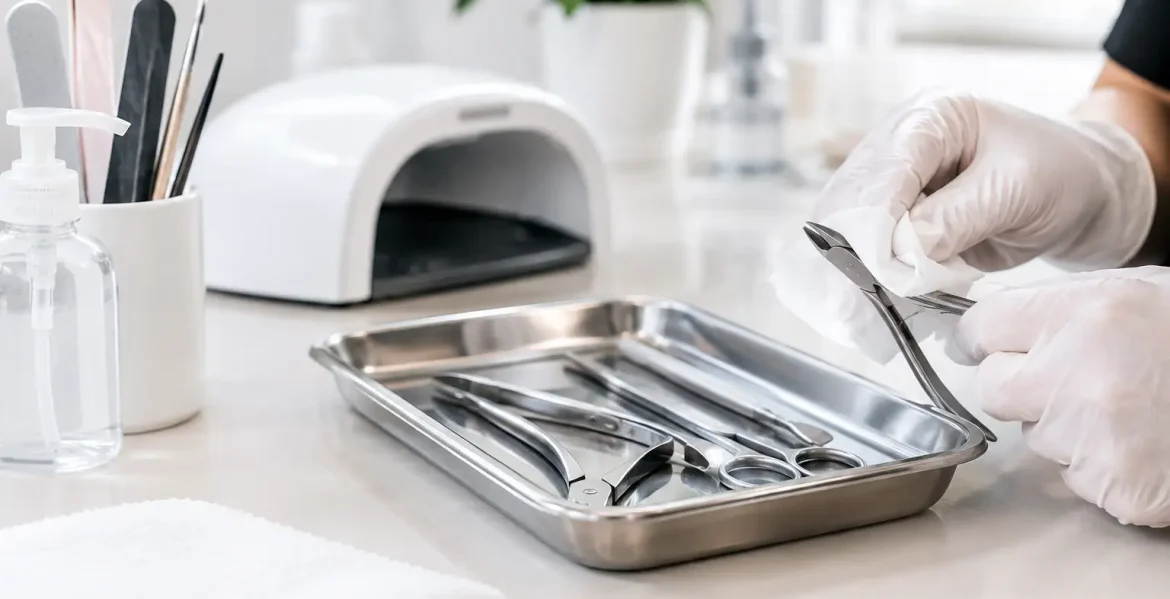
A beautiful manicure should feel like a treat from the first file stroke to the final shine. Salon sanitation for nail tools is a big part of that comfort. It is not an invisible extra or a detail clients should feel awkward asking about. It is a fundamental part of professional nail care, especially when you are trusting someone with your natural nails, cuticles, hands, and feet.
At a thoughtful salon, cleanliness supports the entire experience. You can settle into your pedicure chair, choose a fresh color, or plan a detailed chrome or French-tip set with more confidence when you know the tools and service area are being handled with care.
Why clean nail tools matter
Nail services involve close contact with the skin and nail plate. Even when a service is gentle, tiny breaks in the skin can happen around dry cuticles, hangnails, or areas that have been picked at before an appointment. Tools that touch more than one client must be properly cleaned and disinfected between uses to help reduce the transfer of germs.
There is also a quality reason to care about sanitation. A technician working with clean, well-maintained implements can perform more precise cuticle care, shaping, and detail work. Dull, damaged, or poorly cared-for tools do not belong in a polished service.
Sanitation is not the same as making everything look tidy. A station can appear beautiful while still missing key steps behind the scenes. True professional care involves a repeatable process: removing visible debris, cleaning tools thoroughly, disinfecting them with an appropriate professional product for the required contact time, drying them, and storing them in a clean place until the next service.
Salon sanitation for nail tools: what happens between clients
Not every item is treated in exactly the same way, because materials and uses differ. Metal implements such as cuticle pushers, nippers, and certain scissors can generally be cleaned and disinfected when they are in good condition. Items that cannot be thoroughly cleaned, including many disposable files, buffers, toe separators, and wooden sticks, should be single-use or reserved for one client according to the salon’s protocol.
The distinction matters. Disinfection is a specific process, not a quick wipe. A professional-grade disinfectant must be used according to its directions, including dilution and how long the item needs to remain wet or immersed. Rushing this step can reduce its effectiveness.
At the station, you may notice a technician clearing used items away immediately, wiping down surfaces, and setting out fresh supplies before beginning. Those small visual cues are reassuring, but the work that happens away from the chair matters too. Proper storage keeps cleaned tools separated from anything used, while routine inspection helps ensure implements remain rust-free, sharp, and safe to use.
For pedicures, sanitation extends beyond hand tools. Foot tubs, basins, and jets require careful cleaning and disinfection between guests, following the equipment manufacturer’s directions and local health requirements. If a liner system is used, it should be fresh for each client, but the basin itself still needs proper cleaning. A liner is helpful, not a substitute for a complete process.
What clients can look for during a nail appointment
You do not need to become a sanitation expert before booking a manicure. A few simple observations can help you feel at ease. A professional environment should look organized rather than cluttered, with used items kept apart from ready-to-use tools. Work surfaces should be cleaned between appointments, and the technician should begin with clean hands.
Pay attention to disposable supplies as well. A fresh nail file or buffer is especially meaningful if your natural nails are being shaped or prepped. For services that use e-files, the technician should use clean, properly maintained bits and follow careful technique. E-file bits are durable, but like other reusable tools, they need a complete cleaning and disinfection process between clients.
It is also reasonable to ask a question. A welcoming salon will not make you feel difficult for wanting to understand its practices. You might ask whether files are single-use, how pedicure tubs are cleaned, or whether a particular tool has been disinfected. The answer should be clear, calm, and respectful.
Be cautious of red flags such as tools that appear visibly soiled, files reused without explanation, containers with cloudy liquid, or a technician returning used implements directly to a clean setup. A salon does not need to feel clinical to be sanitary. It can be relaxing, luxurious, and spotless at the same time.
Your role in a clean, comfortable service
Good salon sanitation is a shared commitment. Let your technician know if you have a cut, rash, broken skin, nail infection, or unusual tenderness before the service begins. In some cases, postponing a manicure or pedicure is the kindest choice for your body and helps protect everyone in the salon.
Avoid shaving your legs immediately before a pedicure if you are prone to nicks or irritation. Freshly shaved skin can be more sensitive, and small cuts may not always be obvious. If you have recently had a medical procedure, have circulation concerns, diabetes, or a condition that affects skin healing, it may be wise to speak with your healthcare provider about the nail and foot-care choices that are right for you.
After your appointment, keep your hands and feet clean and moisturized, but resist cutting or aggressively pushing back your own cuticles. Cuticles provide a protective seal around the nail area. Gentle, professional care and regular moisturizing usually give a better result than frequent at-home trimming.
Sanitation should never feel rushed
A polished service takes time, and the same is true of the preparation that supports it. When appointments are scheduled thoughtfully, technicians have room to reset their station, prepare fresh supplies, and focus on each client rather than rushing through the next set.
This is especially valuable for detailed services. Gel overlays, acrylic refills, Gel X extensions, dipping powder, and customized nail art all involve several tools and materials. More steps do not have to mean more worry. They simply call for an organized approach, clean product handling, and attention to what is used once versus what is safely processed for reuse.
There can be practical differences between salons. Some may offer individual client kits for files and buffers, while others use fresh disposable supplies at every visit. Some pedicure systems rely on disposable liners, while others use pipeless equipment that is carefully cleaned and disinfected. The exact setup can vary, but the standard should remain the same: clean tools, clean surfaces, appropriate products, and procedures performed consistently.
At Ivy’s Garden Nails & Spa, we believe self-care feels better when you can relax with confidence. Your appointment should leave you feeling cared for, comfortable, and excited to show off your style – whether that means a simple manicure, a restorative pedicure, or nail art made just for you.
The next time you sit down for a service, notice the care behind the color. A clean station, fresh supplies, and professional tool handling are quiet signs that your comfort matters just as much as your finished nails.
